Introduction
Standing on the edge of the dock or sitting on the swim platform, board strapped to your feet, heart pounding—there is nothing quite like the anticipation of your first wakeboarding session. But let’s be real: looking at the water and wondering if you’re about to faceplant can be intimidating. You aren’t alone. Every pro started exactly where you are right now.
Wakeboarding is one of the most exhilarating water sports on the planet, blending the adrenaline of snowboarding with the freedom of surfing. Whether you are looking to shred at local wakeboarding spots or planning a trip to a world-class cable park, the learning curve is steep but incredibly rewarding.
In this guide, we will break down everything you need to know, from gear essentials and finding the perfect location to mastering the art of standing up. We’ll help you navigate the wake park database to find beginner-friendly water, ensuring your first session leaves you stoked, not soaked (well, maybe a little soaked).
TL;DR: The Quick Start Guide
- Don't Buy, Rent: Use rental gear for your first few sessions.
- Arms Straight: The #1 rule. Never pull the rope to your chest.
- Bend Your Knees: Let your legs act as shock absorbers.
- Find a Cable: Learning on a "System 2.0" cable is often easier than a boat.
- Relax: Tension causes falls. Breathe and enjoy the ride.
What is Wakeboarding? (And Why You’ll Love It)
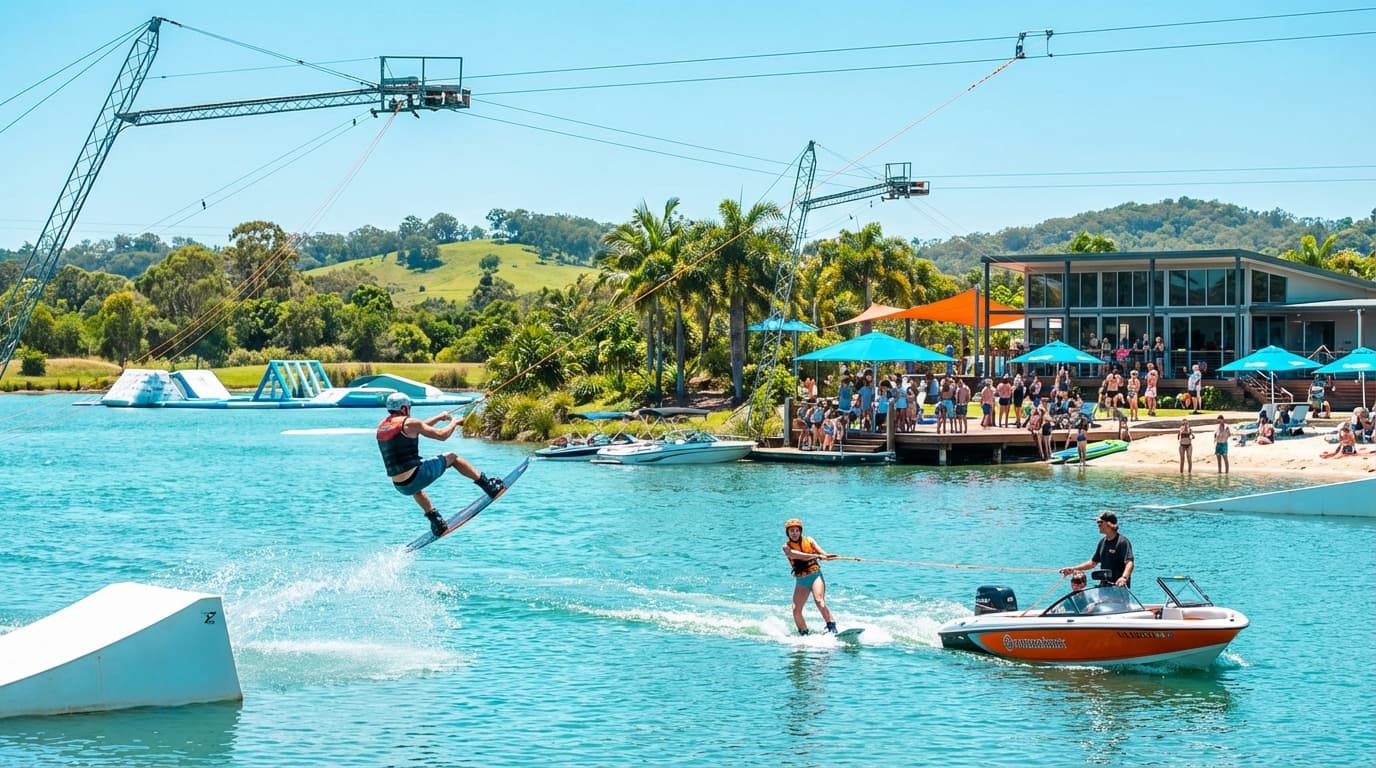
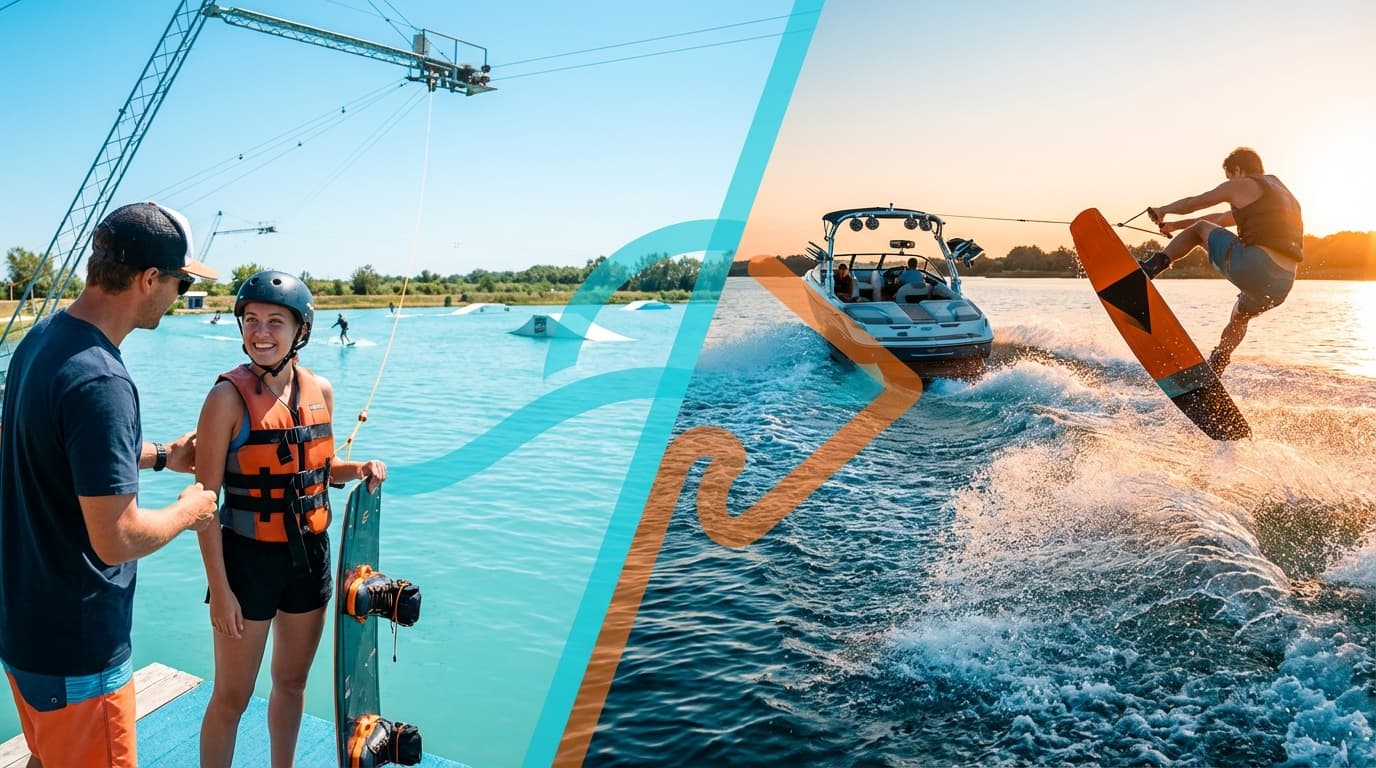
At its core, wakeboarding involves riding a board over the surface of a body of water while being towed. It sounds simple, but the method of towing changes the experience entirely. Before you head out, it is crucial to understand the two main disciplines, as this will dictate where you look in our cable park finder.
Boat Wakeboarding
This is the traditional method. You are towed behind a specialized wakeboard boat at speeds of 18–24 mph. The boat creates a "wake" (two waves) that riders use as ramps to jump and perform tricks.
- Pros: Great for social vibes; riding the wake is a unique feeling.
- Cons: Can be harder to learn due to choppy water; requires access to a boat and a driver.
Cable Wakeboarding
Rapidly growing in popularity, cable parks pull riders using an overhead cable system powered by an electric motor. This is often the most accessible entry point for beginners.
- Pros: Consistent speed; no boat required; affordable; highly accessible via wakeboarding locations worldwide.
- Cons: Learning to turn corners on a full-size cable can be tricky initially.
Pro Tip: For your absolute first time, look for a park with a "System 2.0" or "linear cable." This is a two-tower system where the operator can stop and reverse the cable, making 1-on-1 coaching infinitely easier.
Essential Gear: What You Need (And What You Don’t)
One of the biggest mistakes beginners make is dropping $800 on a pro-model board before they can even stand up. Most water sports destinations and cable parks offer rental gear included in the ticket price. Here is what you need to know.
The Board and Bindings
Beginner boards are typically larger and more stable, with larger fins to help you track straight.
- Rocker: Beginners usually prefer a "continuous rocker" (a smooth curve) for a predictable ride.
- Bindings: Rental bindings are usually adjustable Velcro boots. They should be snug but not painful.
Safety Equipment
- Impact Vest/PFD: Mandatory at all reputable spots. It keeps you afloat and protects your ribs from slapping the water.
- Helmet: Required at cable parks. It protects your head from the board and obstacles.
What to Wear
Board shorts or a swimsuit are standard. However, if the water is chilly, or if you want extra protection from "board rash," a rash guard or wetsuit is highly recommended.
Finding the Best Wakeboarding Spots
Location is everything. Not all wakeboarding spots are created equal, especially for novices. You want calm water, patient operators, and the right environment.
Using a Wake Park Database
When using tools like WakeIndex to search for wakeboard parks near me, filter for "Beginner Friendly" or look for parks that offer "Intro to Wake" classes.
- Cable Parks: Look for parks with a dedicated "learner cable" or slow-speed sessions.
- Boat Spots: If you are booking a charter, ensure the captain is experienced in teaching beginners.
Global vs. Local Context
Whether you are looking for wakesurfing locations in Florida or hitting up a cable park in Australia, the principles remain the same. For example, Australian riders flock to spots like Cables Wake Park in Penrith or Gold Coast Wake Park because they offer specific beginner hours. Always check the park's operating hours and difficulty ratings on the cable park finder before you go.
The Fundamentals: How to Get Up
This is the moment of truth. Whether you are behind a boat or on a cable, the physics of getting up are roughly the same.
1. The Stance
First, determine if you are "Regular" (left foot forward) or "Goofy" (right foot forward).
- The Test: Have a friend gently push you from behind. The foot you step forward with to catch your balance is usually your front foot.
2. The Deep Water Start (Boat)
- Position: Float on your back with the board perpendicular to the boat. Knees bent into your chest.
- Arms: Hold the handle with straight arms. The rope should be between your knees.
- The Pull: As the boat accelerates, do not pull back. Let the boat pull your chest toward your knees.
- The Stand: Once the board planes on top of the water, slowly stand up and turn your hip to bring your front foot forward.
3. The Dock Start (Cable)
- Position: Sit on the dock with the board in the water.
- Ready: Hold the handle with your lead hand (or both hands if the cable is high).
- The Pull: When the carrier engages, let it pull you off the dock. Keep your weight on your back foot.
- Slide: Slide onto the water, keeping your knees bent and arms straight.
Pro Tip: If you fight the rope, the rope will win. Keep your arms straight and let the equipment do the work.
Riding Techniques for Beginners
Once you are up, the feeling is pure magic. But how do you stay up?
Body Posture
- Hips Forward: Don't stick your butt out (the "poo stance"). Push your hips forward over your front foot.
- Shoulders: Keep your shoulders in line with the board, not facing the boat or cable tower.
- Handle Position: Keep the handle low, near your lead hip. This lowers your center of gravity.
Steering and Edging
To steer, you don't turn the board like a car; you lean.
- Heelside Edge: Lean back on your heels to move away from the cable tower or wake. This is the most natural position.
- Toeside Edge: Press down on your toes to move toward the cable tower or wake. This requires more balance.
Handling Corners (Cable Specific)
If you are at a full-size cable park, corners are the boss level for beginners.
- Edge Out: As you approach the corner buoy, edge away from the tower (Heelside).
- Slack: This creates tension. When you round the corner, the cable will go slack.
- Wait: Don't pull! Wait for the cable to catch tension again, then resume riding.
Common Beginner Mistakes to Avoid
Even the most athletic people make these errors. Save yourself the faceplant by avoiding them:
- Pulling the Arms In: This is a natural instinct, but it shifts your center of gravity back and pulls the board out from under you. Fix: Keep elbows locked or relaxed but straight.
- Straightening Legs Too Soon: Locking your knees makes you unstable. Fix: Stay in a squat position until the board is fully planing.
- Looking Down: Where you look is where you go. If you look at the water, you will end up in the water. Fix: Look at the horizon or the boat tower.
Safety and Etiquette
Joining the community at local wakeboarding locations means respecting the rules. The vibe is usually super friendly, but safety comes first.
- Let Go: If you fall, let go of the handle immediately. Dragging in the water can cause injury.
- Swim to Safety: In a cable park, swim to the designated exit points immediately. Do not linger in the riding line.
- Raise Your Hand: If you fall behind a boat, raise your board or hand so other boaters can see you.
- Wait Your Turn: Cable parks have queues. Be patient, chat with locals, and ask for tips—most riders love helping newbies.
Frequently Asked Questions
Q: Do I need to be in good shape to wakeboard?
While you don't need to be an Olympic athlete, a basic level of fitness helps. Wakeboarding is a full-body workout that engages your core, legs, and arms. Expect to be sore the next day!
Q: Is cable wakeboarding harder than boat wakeboarding?
Cable is generally easier for the first start because the pull is from a higher angle, lifting you up naturally. However, boat wakeboarding is easier for continuous riding since you don't have to navigate 90-degree corners.
Q: How much does it cost to start?
A 1-hour session at a cable park usually costs between $30–$50 USD, including rental gear. Boat charters are significantly more expensive, often ranging from $150–$300 per hour.
Q: Can kids learn to wakeboard?
Absolutely! Many wakeboarding spots have "grom" squads or kids' clubs. Children as young as 5 or 6 can learn, especially on slow-speed System 2.0 cables.
Key Takeaways
- Start Simple: Use a cable park finder to locate a park with a System 2.0 (linear) cable for your first time.
- Rent First: Don't buy expensive gear until you are committed to the sport.
- Form Matters: Keep arms straight, knees bent, and eyes on the horizon.
- Relax: Tension is the enemy of balance. Breathe and have fun.
- Safety First: Always wear a helmet and impact vest, and learn the exit points of the park.
Conclusion
Wakeboarding is more than just a sport; it is a lifestyle that opens up a world of travel and community. From the glassy lakes of Florida to the high-tech cable parks of Europe and Australia, there is an endless list of water sports destinations waiting for you.
Remember, the first session is the hardest. Once you feel that glide across the water, you will be hooked for life. So, grab a rental board, overcome the nerves, and get out on the water. Use WakeIndex to plan your next adventure, find the best spots, and connect with the global community of riders. The water is calling!
Find Your Perfect Wake Spot
WakeIndex is the world's most comprehensive database of wakeboarding spots, cable parks, and boat-friendly lakes worldwide.
Explore for free - no account required.
Explore WakeIndex | Find spots worldwide