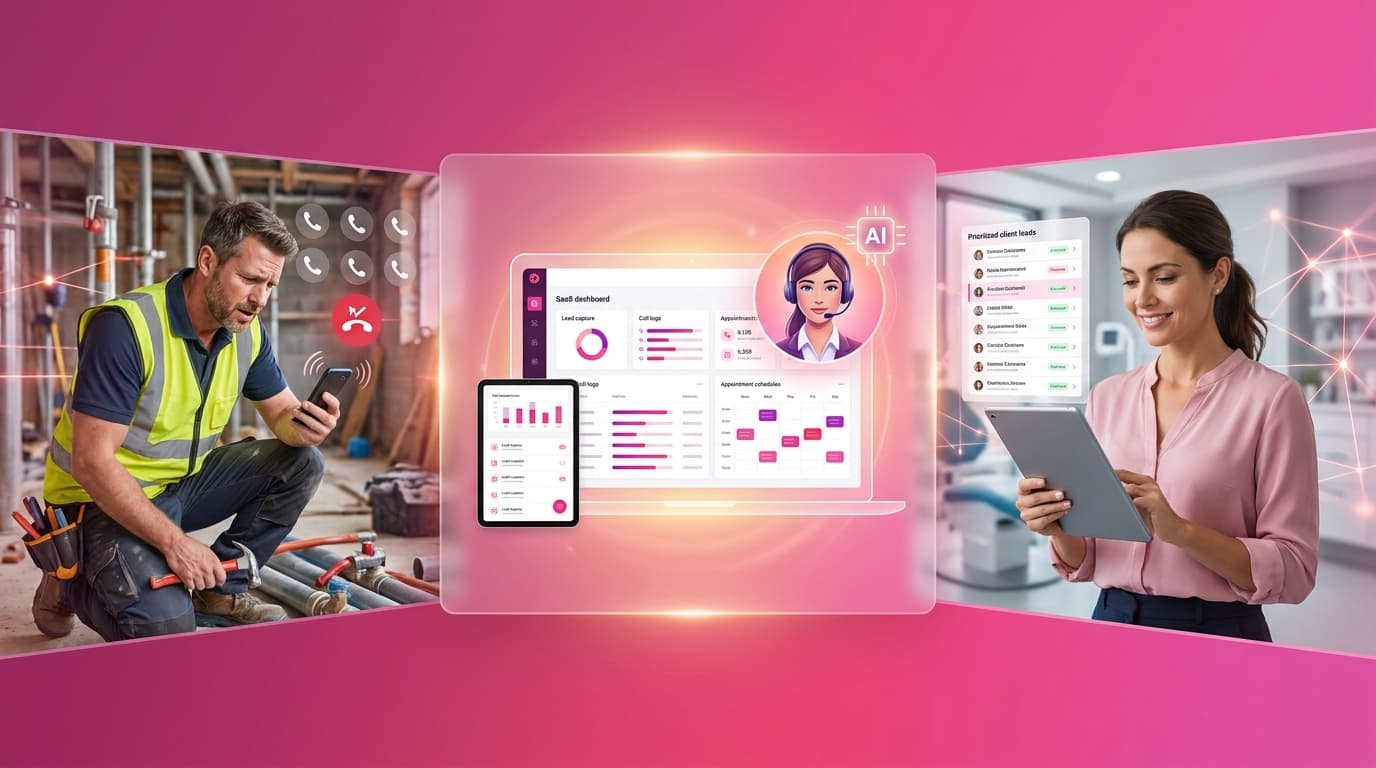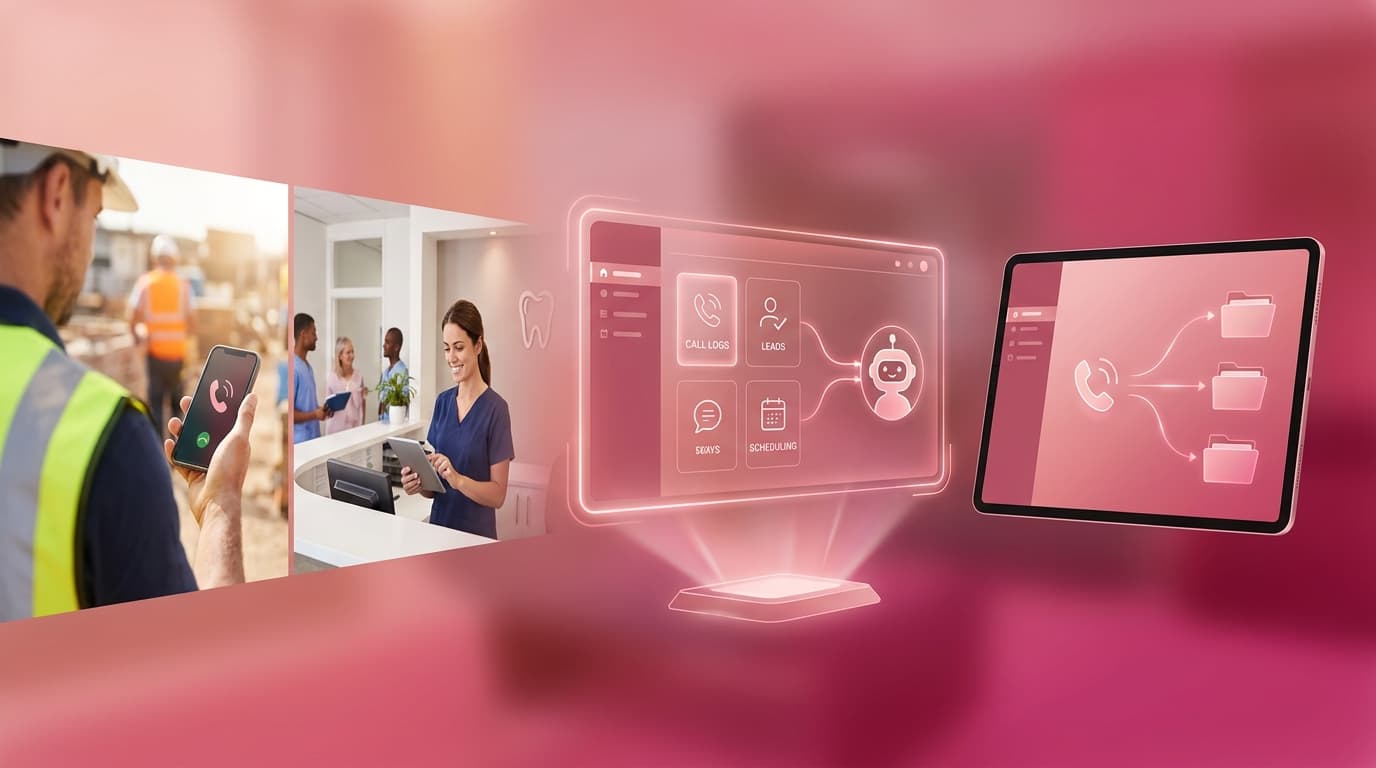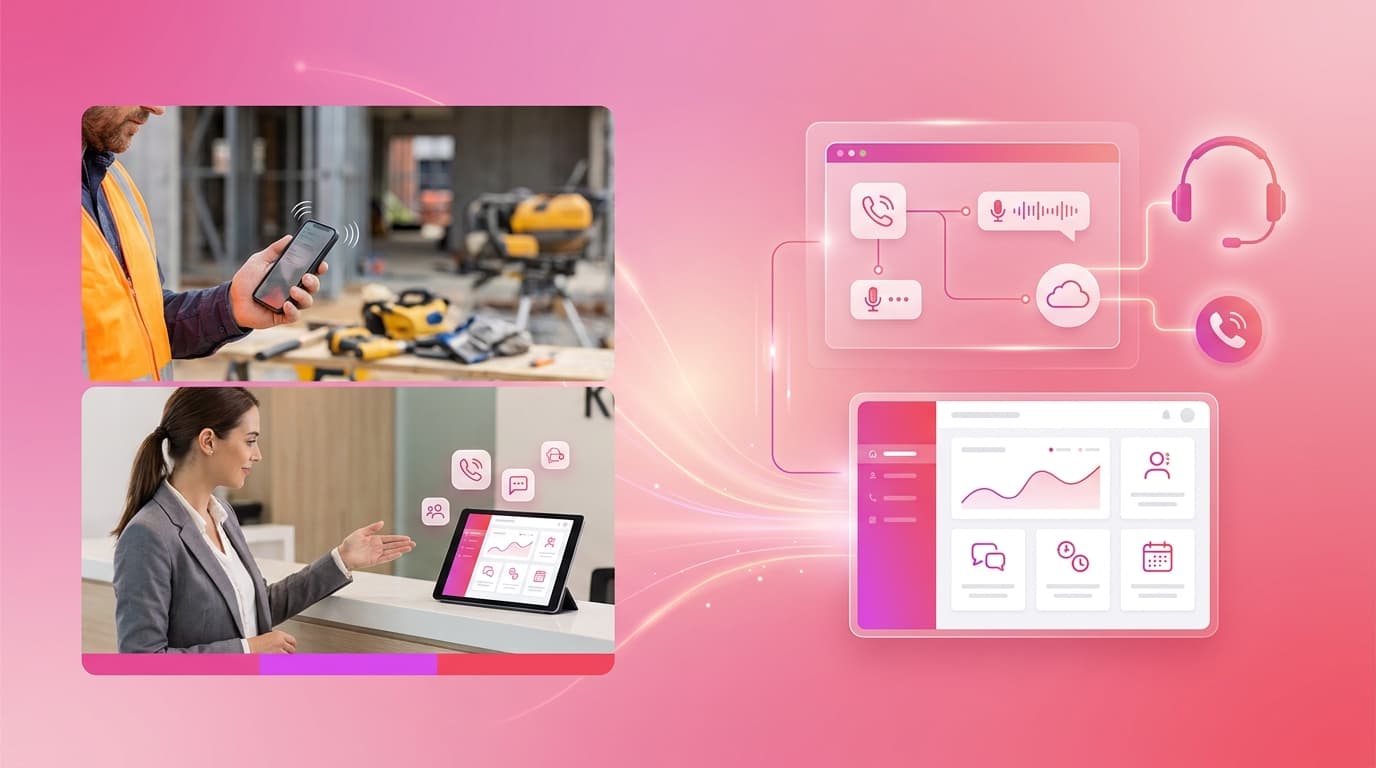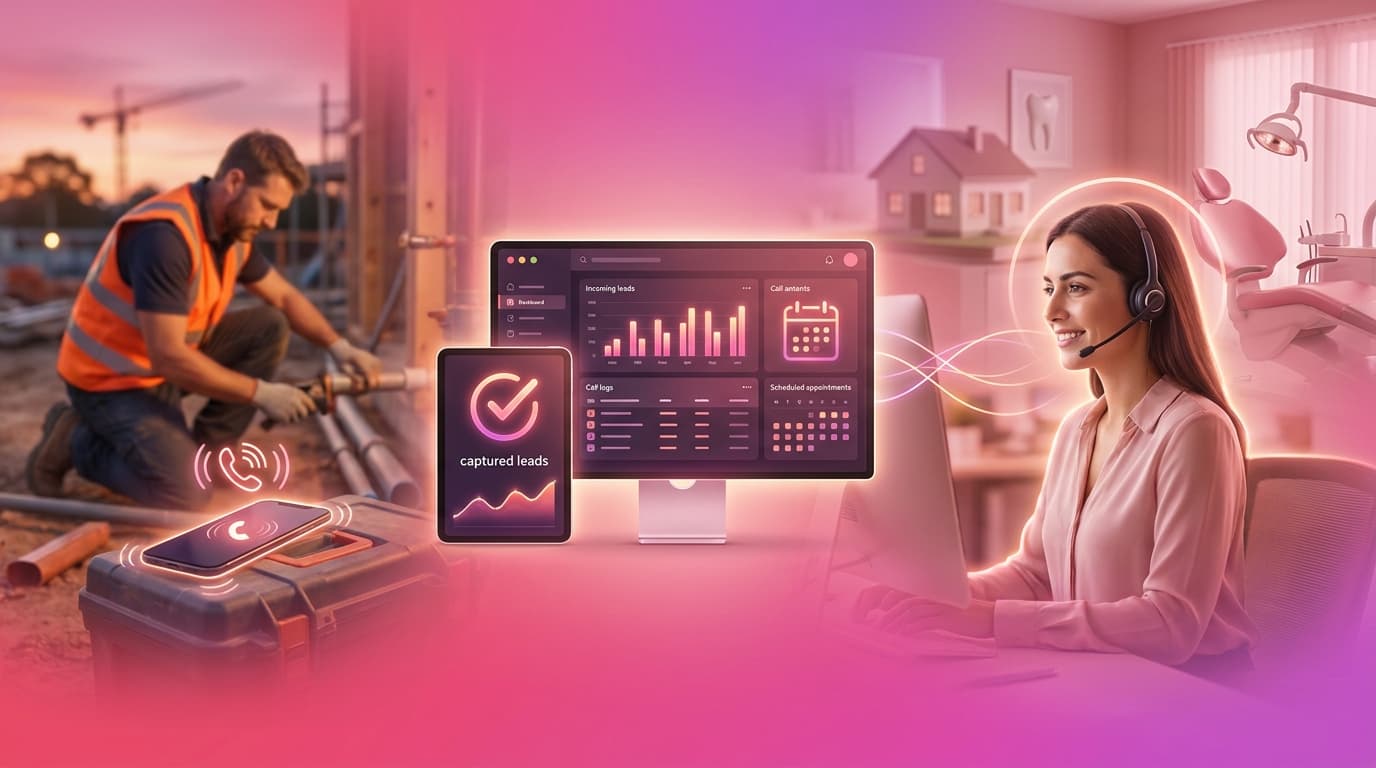
A missed call at 7:43 PM on a Friday costs the average Cairns plumber $450 in lost emergency work. You are sitting on the couch, a beer in hand, and the phone rings. You ignore it. By the time you check the voicemail on Saturday morning, that client has already called three other local businesses and booked the one who picked up.
Getting your after hours call answering sorted is not about working harder or taking your work phone to the pub. It is about plugging a massive hole in your sales funnel. When a potential client has a burst pipe, a sparking switchboard, or a sick dog, they do not want to leave a message. They want a human—or something that sounds exactly like one—to tell them the problem is being handled.
TL;DR:
- Missed after-hours calls equal directly lost revenue.
- Voicemail guarantees a customer will call your competitor.
- Hiring night-shift staff destroys your profit margins.
- AI receptionists qualify leads and push them to your CRM.
- You wake up to booked jobs, not angry voicemails.
The invisible cost of the voicemail beep
Most service business owners dramatically underestimate how much work they lose to voicemail. The loss is invisible. It just looks like a quiet weekend.
Mark, a roofing contractor down in Brisbane, used to switch his phone to silent at 5:00 PM. He figured if it was important, people would leave a message. But when a severe storm rolled through on a Thursday night, his phone rang 14 times between 6:00 PM and midnight. He got exactly two voicemails.
When a customer hears a voicemail greeting, their brain does a very simple calculation. They think, "I just need this leak fixed now, I'm not waiting around for a callback." They hang up, go back to Google, and dial the next bloke on the list.
An effective after hours call answering service stops that scroll. It catches the client while they have their credit card out and their stress levels high. If you can answer the phone, capture their details, and confirm their job is in the system, they stop calling other businesses. You win the work by default.
The headache of staffing the graveyard shift
For years, the only way to solve this problem was to hire human operators. If you have ever tried recruiting for after hours call answering service jobs, you know exactly how painful it is.
You post an ad for after hours on call jobs, and you get flooded with applications from people who realise three weeks in that staying awake until 3:00 AM on a Tuesday is miserable. Staff turnover is brutal. To cover a 24/7 roster properly, you need at least three staff members, plus weekend penalty rates, superannuation, and sick leave. For a local sparkie or a mid-sized pest control crew, dropping $80,000 a year on night-shift admin just does not make financial sense.
The alternative was outsourcing to a massive, overseas call centre. We have all experienced this as consumers. You call a local number, get routed to a noisy room halfway across the world, and speak to an operator who is reading rigidly from a laminated script. They cannot pronounce your suburb, they do not understand what a "safety switch" is, and they frustrate your customer even more.
High stakes for clinics and property managers
The requirement for instant, accurate phone handling spikes dramatically when you look at healthcare and real estate.
When a tenant in a Cairns CBD apartment has a hot water system flood their living room at 2:00 AM, the property manager needs to know immediately. But if a tenant is just calling to complain about a squeaky ceiling fan, that can wait until Monday.
The stakes are even higher for veterinarians and dentists. Traditional on call after hours answering services for medical offices usually rely on basic message-taking. But when a dog swallows a bait at 10:00 PM, the owner is panicked. They need calm, accurate information gathered quickly. They need to know if the on-call vet is available and what the emergency call-out fee is. A standard answering service operator often lacks the context to handle these high-stress situations properly.
How AI fixes the out of hours problem
This is where out of hours call answering has shifted completely. You no longer need to choose between paying massive penalty rates or frustrating your clients with an offshore call centre.
I've spent enough time around Cairns tradies to know that nobody wants to do admin at 9:00 PM. When I was building Call Katie, the first beta tester was a chippy in Edmonton who was losing three deck quotes a week because he couldn't answer the phone while running a drop saw. We plugged Katie in, and suddenly he had fully qualified leads sitting in his inbox when he knocked off.
An AI receptionist like Call Katie uses advanced voice models from ElevenLabs and Azure. It does not sound like a robot from 2010. It sounds like a competent local admin worker. Katie picks up the phone on the first ring, whether it is 2:00 PM or 2:00 AM.
More importantly, it does not use frustrating phone trees. There is no "Press 1 for Sales." The caller just speaks naturally.
Automatic lead qualification
When the phone rings after hours, your goal is data capture. You need to know if this is a $4,000 emergency roof repair or a $90 gutter clean that can wait until next month.
Katie is programmed to extract specific information from every single call:
- The caller's full name
- Their best contact number
- The site address
- The exact nature of the work required
- The urgency of the job
Direct CRM integration
Taking the message is only half the battle. If an answering service just sends you an email that gets buried under supplier invoices, it is useless.
Katie pushes structured data directly into your existing software. If you use QuoteMate, Jobber, or HubSpot, the AI creates a new client record, logs the call transcript, and sets up a pending job. You wake up, open your laptop, and the work is already organised and waiting for a quote.
Structuring your qualification flow
You cannot just turn on an answering service and hope for the best. You need to configure the logic so it protects your time. You are in control of the greeting, the tone, and the exact questions the system asks.
If you run an emergency plumbing business, your after-hours flow needs to aggressively filter out the non-urgent jobs so you only get out of bed for the high-margin work.
Pro Tip: Set your AI receptionist to ask, "Is there active flooding or a safety hazard?" early in the conversation. If the caller says yes, the system flags it as high-priority and sends you an urgent SMS. If they say no, the system politely lets them know the team will review the job on Monday morning.
Setting your boundaries
You also need to be clear about your pricing upfront to avoid driving across town for a time-waster. You can configure your AI to say, "Just letting you know, our after-hours call-out fee is $350 ex-GST, which covers the first hour of labour. Would you like me to dispatch the on-call technician?"
If the client balks at the price and hangs up, the AI just saved you a wasted trip. If they agree, the AI logs the acceptance and alerts you to get the ute started.
Frequently Asked Questions
Q: How much does an after hours call answering service cost?
Traditional human answering services charge anywhere from $2 to $5 per minute, plus expensive monthly retainers. Hiring your own night staff costs tens of thousands a year. Call Katie starts from $149/mo AUD plus standard usage, giving you 24/7 coverage for less than the cost of one lost emergency call-out.
Q: Will my clients know they are talking to an AI?
The voice models are incredibly lifelike, complete with natural pauses and conversational pacing. While some tech-savvy callers might figure it out, most clients simply appreciate that their call was answered immediately, their details were taken accurately, and their problem is being addressed.
Q: What happens if a customer has a complex problem?
Katie is trained on your specific business context. If a caller goes off-topic or asks a highly complex technical question, the AI is programmed to politely pivot. It will say, "I'll need to have one of our senior technicians review that specific issue. Let me grab your address and I'll make sure they have all these details."
Q: How do I get notified of an emergency job overnight?
You configure the routing rules. Non-urgent jobs can be pushed silently to your CRM or email for the morning. For critical emergencies, the system can immediately trigger an SMS to your on-call technician's phone, ensuring you only get woken up when there is actual money on the table.
Key Takeaways
- Voicemail is a lead-killer; customers will simply call your competitor if you do not answer.
- Hiring local night-shift staff is too expensive for most small service businesses.
- Traditional offshore answering services often frustrate callers with rigid scripts.
- AI receptionists provide 24/7 coverage, capturing names, addresses, and job details naturally.
- Direct CRM integration means you wake up to structured leads, not a list of phone numbers to call back.
Conclusion
Running a service business in Australia is hard enough without bleeding revenue while you sleep. Every time that phone rings out to voicemail after 5:00 PM, you are handing money directly to the bloke down the road who bothered to sort out his phone systems. You do not need to work 24 hours a day, but your business needs to be open to take the work when the customer is ready to buy. Setting up a reliable system to handle those calls ensures your pipeline stays full, your margins stay healthy, and you actually get to enjoy your weekend without staring at your phone.
Stop Letting the Phone Cost You Jobs
Call Katie answers every call 24/7, qualifies the lead in natural conversation, and pushes the structured job straight into QuoteMate, Jobber, HubSpot, or any custom webhook.
14-day free trial — no credit card. From $149/mo AUD + usage.
Start Free Trial | Built by HansenDev